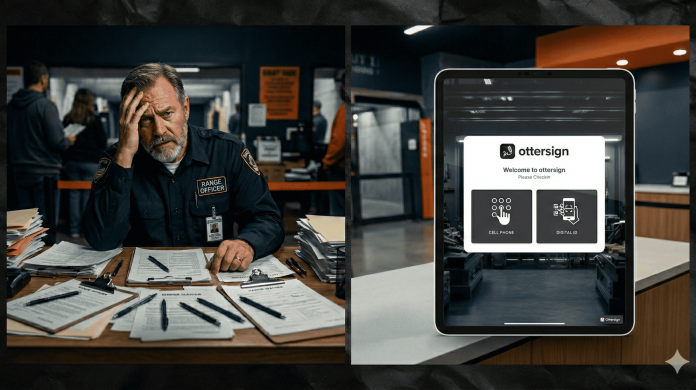

If you’ve been with us for a while, you probably know OtterWaiver as the platform that helped you finally get rid of paper waivers, clipboards, and chaotic check-in processes. For many businesses, OtterWaiver became one of those rare tools you set up once and then quietly rely on every day—it just worked.
But Otter didn’t start as a branding exercise or a generic software idea. It started with a very real problem in the industry—and a realization that most people had overlooked something critical.
The Origin Story: Finding the Gap No One Was Fixing
Back in 2019, while researching every digital waiver system on the market, we worked closely with attorneys, lawyers, and insurance companies tied directly to the outdoor and recreation industries. What we discovered was alarming.
Despite how common “digital waivers” had become, there wasn’t a single platform truly following electronic signature compliance standards in a meaningful way. Most tools were little more than PDFs with a checkbox. Others treated waivers as a legal gray area and assumed they didn’t need to meet the same standards as contracts or agreements.
From a legal and insurance standpoint, that created a massive hole in the industry.
Waivers were being signed electronically—but without proper signer intent, defensible audit trails, or compliance with global e-signature regulations. Businesses were exposed to risk without realizing it, simply because there wasn’t a better option available.
That gap is why OtterWaiver was built.
In 2020, we set out to create the first digital waiver platform designed from the ground up to follow global e-signature compliance standards, while still behaving like a waiver system—not a bloated contract tool that slowed customers down or confused staff.
Built for the Real World, Not the Legal Textbook
To do this right, we didn’t guess.
Our team worked directly with attorneys, guides, theme parks, outfitters, and activity providers to understand how waivers actually function in the real world. Outdoor businesses don’t have the luxury of long signing flows or complex onboarding. Waivers are often signed on mobile devices, on-site, sometimes under pressure, and often in high-volume environments.
So OtterWaiver was designed to strike a careful balance:
Behind the scenes, it followed strict e-signature standards recognized globally.
On the surface, it stayed fast, simple, and intuitive—just like a waiver should be.
At the time, the market was highly fragmented. Paper waivers were still common. Digital tools existed, but many were built without any serious understanding of waiver law, electronic signature regulations, or insurance expectations. Businesses were forced to choose between convenience and correctness.
OtterWaiver eliminated that tradeoff.
From day one, the platform focused on being easy to use, increasing customer throughput, improving retention, and lowering service costs—while also producing records that attorneys and insurers could confidently stand behind.
Growth Beyond Waivers
As more businesses adopted OtterWaiver, something interesting happened.
Customers began asking, “If this works so well for waivers, why can’t we use it for everything else we need signed?”
So we listened—and we built.
Forms came next: registrations, intake forms, feedback forms, internal forms, lead capture. Then came dual-party and multi-party documents. Then one-off documents that didn’t require templates. Then automations, email and SMS reminders, kiosks, mobile-first signing, and smarter document tracking.
Over time, many customers weren’t just using OtterWaiver for waivers anymore.
They were using it to run operations.
And that’s when the name started to feel limiting.
Signing Was Only Half the Problem
As OtterWaiver matured, we realized something else the e-signature industry had largely ignored.
Most e-signature tools were built to do one thing: capture a signature. That was it. The document itself mattered, but the data inside the document—the information people entered while signing—was treated as an afterthought or locked away in static PDFs.
From an operational standpoint, that made no sense.
In real businesses, especially in the outdoor and recreation industries, the value isn’t just the signature. It’s the data tied to that signature: names, contact information, participation details, preferences, acknowledgments, and intent. That information drives staffing decisions, improves customer experience, reduces friction, and fuels future communication.
So in 2020, we took a step that was unusual for the e-signature space at the time.
We built smart forms directly into the signing experience.
Not bolt-ons. Not post-processing tools. Real, structured data collection embedded inside legally compliant e-signature workflows—designed to be reusable, searchable, and actionable.
This meant businesses could do more than just store signed documents. They could:
- Capture structured data at the moment of signing
- Reuse that data across future forms and documents
- Reduce repeat entry for returning customers
- Improve check-in speed and accuracy
- Power follow-ups, reminders, and marketing workflows
At the time, this simply didn’t exist in the broader e-signature market in any meaningful way. Signing and data lived in separate worlds. We intentionally brought them together.
That decision quietly changed how customers used the platform.
Suddenly, Otter wasn’t just a place where documents went to get signed—it became a system of record. A place where businesses could understand their customers better, reduce operational drag, and create smarter downstream workflows.
This focus on data-first signing is one of the reasons Otter continued to outgrow the idea of being “just a waiver platform.” The moment you treat documents as living data instead of dead files, the entire product category expands.
And that expansion is exactly what led us to OtterSign.
Why OtterSign
At a certain point, “OtterWaiver” no longer described what the platform actually did. Waivers were still a core strength—but they were no longer the full picture.
People were using Otter to:
- Sign waivers
- Sign forms
- Sign agreements
- Sign internal documents
- Sign customer documents
- Handle one-off signatures
The platform had become a complete e-signature and smart document system. The name needed to reflect that.
That’s why, as of January 1, OtterWaiver is now OtterSign.
This evolution follows a familiar pattern in the software world. As platforms mature, names often change to reflect expanded capabilities—much like when HelloSign became Dropbox Sign as its role grew beyond a single feature set.
Same idea. Clearer future.
What’s Not Changing
It’s important to be clear: this is a rebrand, not a reset.
Your account stays the same.
Your documents stay the same.
Your data stays the same.
Your workflows stay the same.
The same compliance standards, audit trails, security practices, and legal defensibility remain intact. Nothing was removed or replaced. The foundation that made OtterWaiver trusted is the same foundation OtterSign is built on.
What This Unlocks Going Forward
OtterSign gives us the freedom to keep building without artificial boundaries.
It allows us to expand document workflows, improve identity-linked signer records, deepen automation, and support more use cases—without constantly explaining that “yes, you can use OtterWaiver for that too.”
Because now the name already says it.
OtterSign is about signing—securely, compliantly, and at scale.
Same Origin. Bigger Vision.
Otter was born from a simple but critical insight: the industry deserved better than shortcuts. That hasn’t changed.
OtterWaiver fixed what the market got wrong about digital waivers.
OtterSign carries that same standard forward—across every document you need signed.
We’re proud of where this started, excited about where it’s going, and grateful to the customers who helped shape it along the way. 🦦✍️